Consider this the memo

Updated: Sep 24
What worked at 32 stopped working. The rules changed quietly, and too many women read that as personal failure.
“I feel like I’ve failed…again. I feel like I’ve wasted so much of my life and even if I do get a hold of myself now it’s too late to enjoy it anyhow.”
A woman in her forties wrote that in a survey I sent this summer. She gave me permission to share it anonymously.
I think about her often.
Look at what she’s certain of. The failing is hers. The waste is hers. Every part points to herself.
I don’t know enough about her health or her life to tell you exactly why her plans stopped working.
But look how quickly she knew exactly who to blame.
And I’d bet she’s more than capable everywhere else. Most of the women who wrote me are. They run full households, carry demanding jobs, remember everyone's wants and needs, and keep it all moving.
She knows effort. Effort has always worked.
When something isn’t working, she tries to plan better and try harder. That’s how she handles everything else.
Then somewhere in her forties, the relationship between effort and results starts getting weird.
The workouts that kept everything roughly where it was.
The way of eating that pulled her back after letting loose a bit.
The sleep she could lose all week and make up for on the weekend.
She keeps doing what worked before, but her body gives her a different answer.
And no memo goes out explaining why.
So she looks at the one thing she can see: herself.
In my small survey of 22 women, 8 selected “my own willpower” when I asked why their plans had failed.
Off a menu.
I coach nutrition and stress recovery, and I got a menopause certification because I’m going through it too. I wanted to understand the changes I was feeling in my own body, along with the ones women kept describing to me.
So let's save us all a few Mondays.
Perimenopause can start years before your final period, often when you reach your forties. Plenty of women are already in it before they even know to call it that.
Sleep is often one of the first places women feel the change. Around 40 to 60 percent report sleep problems during the transition.
Body composition can start to shift too. Fat can increase and lean mass can fall without a dramatic jump on the scale.
So yes, your jeans can fit differently while the number barely moves.
Then one bad night follows you into the next day. Research has found that shortened sleep can increase hunger and make cravings more intense.
That’s a hard day to execute a perfect plan.
Then add the life sitting on top of it.
Kids who need you differently. Parents who need you more suddenly. Work at its most demanding. A body changing in ways nobody taught you to expect.
The plan still expects the time, sleep, recovery, and decision-making capacity you had 10 years ago.
Your ordinary Tuesday may not have space for many of these things.
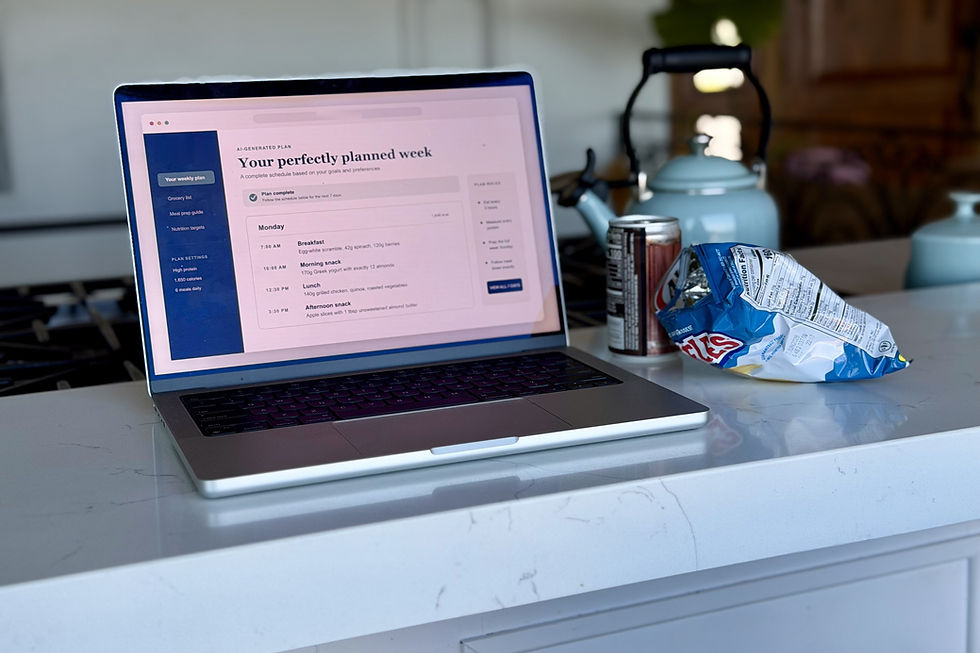
And somehow, the whole thing gets filed under “I need more discipline.”
The woman who wrote me this summer said that even if she gets a hold of herself now, it might be too late to enjoy her life.
That’s the line I can’t shake.
I want to sit beside her and say: your life is still yours. Every day gives you the opportunity to feel good in it. One step at a time.
Consider this the memo.
Alex
Alex Maxwell is a nutrition and stress recovery coach, a certified menopause coach, and the founder of Rise Unstuck. She helps women build the habits that hold when life is full, so a hard week stops meaning another Day 1.
She drinks her water before her coffee. Most days.