Your brain is just trying to help

I know the 9 p.m. kitchen pretty well.
Lights half off. House finally quiet. Me staring into the pantry like something new might have appeared since dinner.
I’m not hungry. I know I’m not hungry. I’m there anyway.
For years, my next thought was some version of: What is wrong with me?
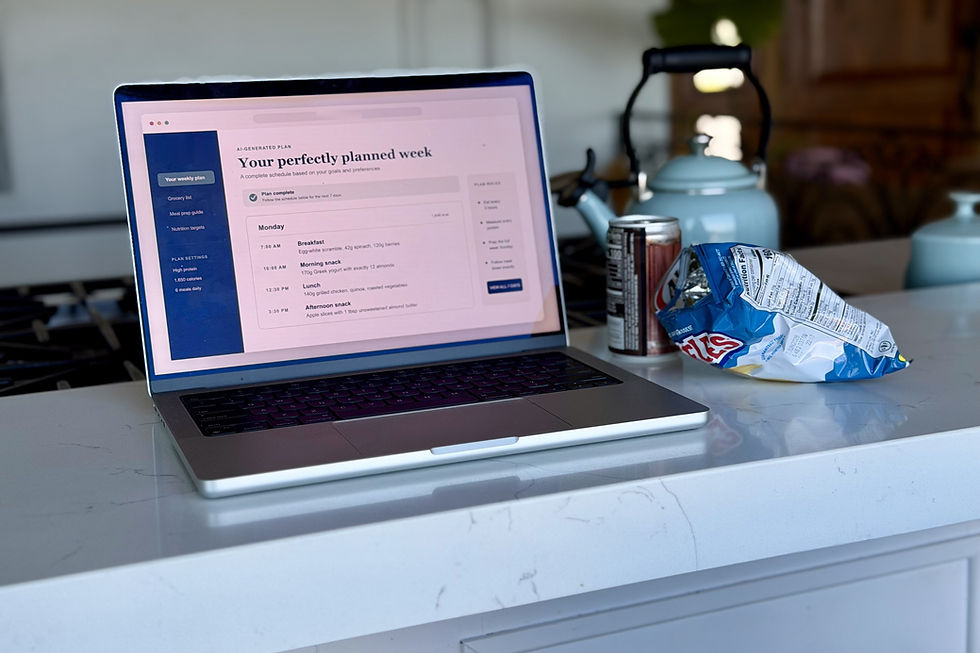
I knew what I was supposed to do. I’m a nutrition coach. And I was still eating chips straight from the bag.
It happened again this week.
I fought with my daughter, yet again. About something so ridiculous I just couldn’t believe we were having the same argument.
I was so frustrated, and I kept thinking about what a bad mother I must be.
And a little later, there I was again, in front of the pantry.
What I didn't notice for years was how much had already happened before I opened that door.
Sometimes I was stressed out. Sometimes I was lonely. Sometimes I was still angry about a conversation from that morning. Or the day had just asked for everything, and left me nothing for myself.
So my brain went looking for the fastest way to change how I felt.
And chips had worked before. Salty, crunchy, no preparation required. For a few minutes, I stopped thinking about everything else.
The chips did exactly what I wanted them to do, and my brain remembered that. So the next time I felt that way, the urge came back, often before I’d even noticed what I was feeling.
My brain was trying to help. It reached for the fastest thing it knew.
Once I saw the order clearly, I had somewhere to step in.
The feeling came first. The chips came second.
So this week, standing there, I said what I was feeling. Out loud because I was alone, which sounds a little ridiculous and works anyway.
“I’m so frustrated. I just don’t understand.”
Then the other half: “And I want chips.”
Saying both parts out loud makes the pattern easier to see. Researchers call this affect labeling. There’s brain-imaging research suggesting that putting feelings into words can calm some of the emotional response.
Then I asked what I wanted the chips to do for me. That night, the answer was quiet and a clear head.
So I went for a walk to look for peacocks. (Yes, wild ones. They roam around where I live.)
Other nights it’s different.
If I’m actually hungry, I eat. If I’m exhausted, I start getting ready for bed. If I’m lonely, I go bug my kids or text someone who I know will make me feel better.
And some nights I still want the chips. So I put them in a bowl, sit down, and eat them on purpose.
That counts. I noticed what was happening and I chose.
Some nights my hand is already in the bag before I notice. That counts too. I'll catch it a little sooner the next time.
And “what’s wrong with me?” gets a little quieter.
So if you find yourself standing in front of the pantry tonight, start with what came before it.
What happened today? What are you feeling right now?
Then name the urge. What do you feel pulled to do?
Then choose the smallest thing that might help with what you actually need.
Start with the feeling. It was there first.
Get the Sunday email Alex Maxwell is a nutrition and stress recovery coach, a certified menopause coach, and the founder of Rise Unstuck. She helps women build the habits that hold when life is full, so a hard week stops meaning another Day 1.
She drinks her water before her coffee. Most days.